High blood pressure · still not controlled on medication
Can Hypertension Be Reversed Without One More Pill?
A neurosurgeon of 25 years says you can lower blood pressure naturally
without medication — and finally control your blood pressure — because the real villain
was never the salt.
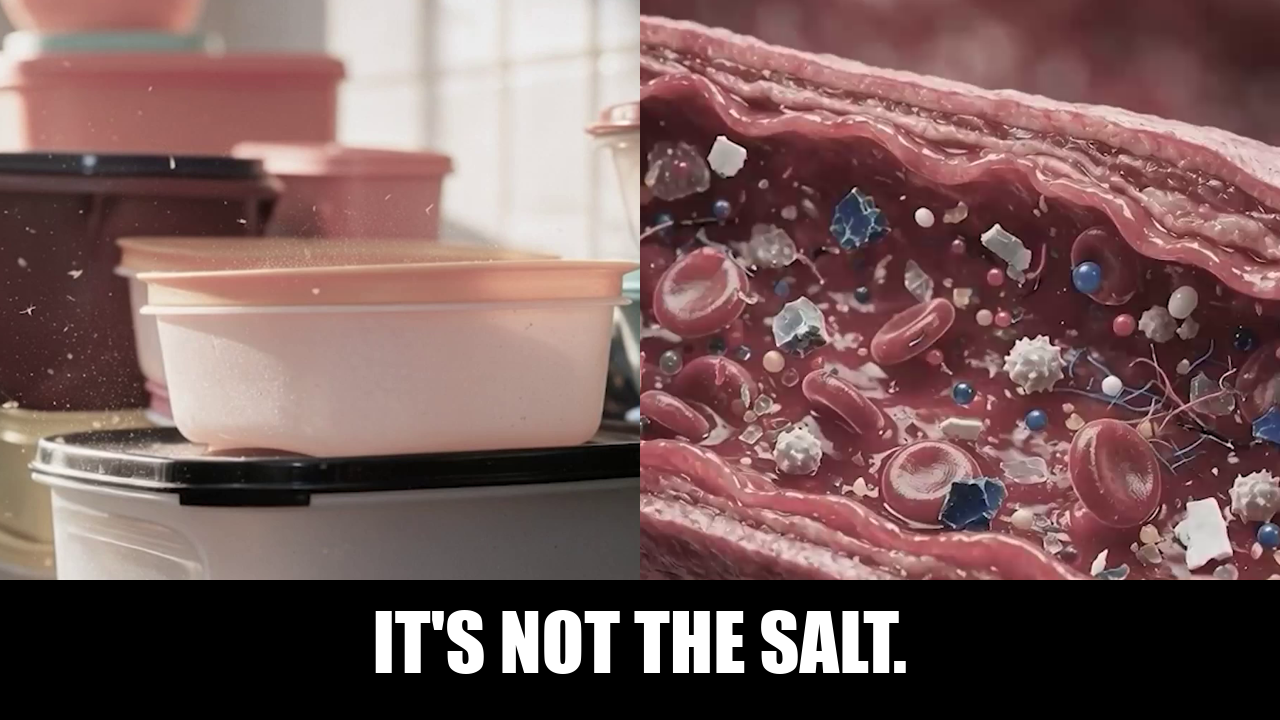
It opens as a televised investigation into families with high blood pressure across three generations. Watch it through — he says there is a right way and a wrong way to do this.
Show Me What Keeps The Number Up
Free presentation · no sign-up
The Pills Are Working. You Just Can’t Live Like This.
The condition never hurt. The treatment does.
The dry cough that showed up a few weeks after the first prescription and never left. The one
that wakes your wife. The one that makes people turn around in church. Half the people who get
that cough end up having to come off the drug entirely.
The ankles that swell by evening until the shoes don’t fit. The tiredness that arrived the
same month the pill did. The bathroom trips that made you say no to the drive to your
daughter’s place.
And the one you have not brought up with your doctor, because you are not going to say it out
loud in that room.
That pressure at the back of your neck that will not go away.
Out of breath climbing one flight of stairs, or walking to the mailbox.
The dizziness when you get out of bed.
The ringing in your ears. The tightness in your chest in the middle of the day.
The palpitation that comes back in the night, no matter what you do.
And the fear underneath all of it — that one night you simply will not wake up.
You cut the salt. The food lost its joy. You walked every morning. You measured three times a
day. And the monitor kept showing 160 over 110. 170 over 100.
Then at the next appointment you hear the same sentence: we may need to add another
one.
Here is what nobody puts in front of you, and it is not his number — it is the federal
health data. Nearly half of American adults live with high blood pressure, and only about
one in four has it under control. The rest stay at risk, and stay customers.
119.9M
American adults living with high blood pressure
1 in 4
is the share that actually keeps it under control
34M
are not taking the medication the guidelines say they need
If this were a matter of discipline, that number would not look like that. You were never
the problem.
Then Why Won’t It Come Down
The answer starts in the first two minutes
It Runs In The Family. That Is Not Why It Won’t Come Down.
Maybe you have heard it at every appointment: it runs in the family. Your mother had it,
her father had it, and now the cuff says it about you — passed down, as the investigation puts
it, like a last name.
The video gives the genes their due. Studies of twins credit genetics with somewhere between
30 and 50 percent of blood pressure. Which leaves the question nobody in those
families thinks to ask: what explains the rest?
The same house. The same water. The same cutting boards, the same plastic containers, the same
brands on the same shelf for thirty years.
The average American now takes in about five grams of plastic a week —
roughly the weight of a credit card. In a family kitchen, everyone eats from the same card.
It does not stay in the kitchen. The report shows microscopic fragments of plastic found inside
the plaque of human arteries, and says people who carry them face an 80 percent higher
risk of heart attack, stroke or death. The gene may carry the weapon. What builds up inside
the artery is something else.
Once those fragments reach your bloodstream, they travel everywhere.
And in his telling the body does what a body does when something is cutting it from the inside: it
goes into defense mode, day and night, laying down a protein called fibrin to patch
the microscopic cuts in your artery walls.
That endless patching is the thing with a name.
What They Call It, And What It Does
The name comes in the first two minutes
Arterial Cement
That is the name he gives to the barrier he says your own body keeps building on
the inside of your arteries. Not plaque from bacon. Not the salt shaker. A solid wall of repair
tissue, laid down over and over, that slowly suffocates the hardest-working organ you have
— one hundred thousand beats a day.
He cites research in which surgeons took out the material clogging the arteries of 257
patients and sent it to the lab. Plastic turned up in every one of them.
He says your cardiologist has probably never heard the term, because it was only
identified recently by independent researchers — and because, in his view, there is no money
in telling you about it. A patient who stops needing the pharmacy every month stops being a
customer for life.
Now here is the part that changes the question. The investigation travels to a corner of
Sardinia, an island off Italy, where families have been eating salt the same way
for generations — and produce more people past one hundred than almost anywhere else on
earth. Here, almost one adult in two lives with high blood pressure. There, according to the
presentation, it is fewer than one in twenty.
He argues the body can clear that barrier on its own once it gets what it has been missing. The
clue was something those families have eaten every day for centuries: something produced by bees.
Not the kind sitting on your supermarket shelf.
Prepared the right way, every morning, that is what he calls the arterial flush
ritual. He says more than 19,000 Americans are already using it.
What goes into it, in what proportion, and the mistake he says most people make with it are
what he shows on camera.
Watch Him Do The Ritual
Once a morning, at home
Before You Fill That Prescription Again
He put the whole thing on video and it runs a while, so put it on when you can watch it
through. He names what keeps the number up, where the answer was found, and the right way to
prepare the ritual so it does anything at all.
Keep taking what you were prescribed. Keep your appointments. Nothing here replaces your own
physician, and results vary from one person to the next.
Start The Presentation
Free · no sign-up · watch it to the end
Is this the same thing my doctor already told me to do?
Most likely not. The usual advice is less salt, more walking and the next
prescription. What he walks through starts somewhere else entirely — with what a whole
family shares in the same kitchen for years.
Do I have to stop my medication?
No. Never stop or change a prescription on your own. Keep taking what you
were given and keep your appointments — what he shows is meant to sit alongside the care
you already have.
How long does the presentation run?
Long enough that you should start it when you have the time to finish it.
The part that matters most — how to prepare the ritual — comes at the end,
after the explanation, so watch it through.
Does it work for everyone?
No, and he says so himself. Results vary from one person to the next, and
nothing here is a promise of a particular outcome.